Her areas of expertise include accounting system and enterprise resource planning implementations, as well as accounting business process improvement and workflow design. Jami has collaborated with clients large and small in the technology, financial, and post-secondary fields. Current assets usually appear in the first section of the balance sheet and are often explicitly labelled.
How Do Investors Use Current Assets?
For example, property, plant, and equipment are not typically considered current assets. Current assets are considered short-term assets because they generally are convertible to cash within a firm’s fiscal year. They are the resources a company needs to run its day-to-day operations and pay its current expenses. Current assets are generally reported on the balance sheet at their current or market price.
- Finally, if required, the business or the asset owner has to book the impairment loss.
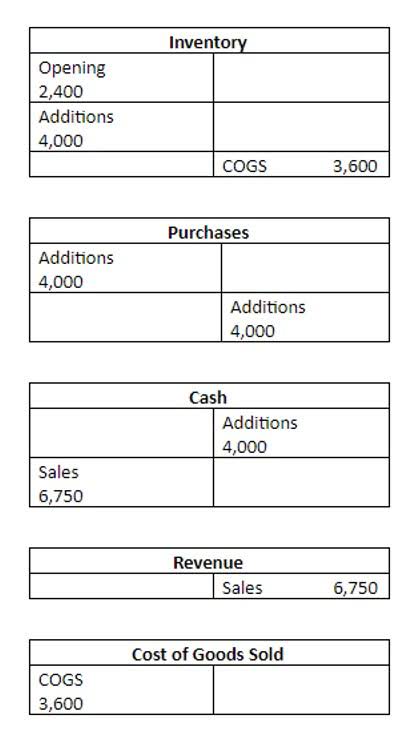
- Debit amounts are entered on the left side of the “T” and credit amounts are entered on the right side.
- Purchases of PP&E are a signal that management has faith in the long-term outlook of its company.
- Noncurrent assets include intangible assets, such as patents and copyrights.
- Marketable Securities is the account where the total value of liquid investments that can be quickly converted to cash without reducing their market value is entered.
- Inventory items are considered current assets when a business plans to sell them for profit within twelve months.
Machinery and equipment
In retail, store buildings, shelving, and point-of-sale equipment play a significant role in customer service and sales. For the transportation and logistics industry, vehicles, warehouses, and loading equipment are critical assets that enable the movement of goods. Similarly, in healthcare, plant assets include medical equipment, diagnostic machines, and specialized facilities that support patient care. Even in technology sectors, plant assets can include server farms, computer hardware, and office spaces that house research and development. Each industry tailors its asset management to meet operational needs, balancing the cost, maintenance, and efficiency of these assets to stay competitive and maintain service standards.
Is Common Stock an Asset or a Liability?
While these assets might not directly contribute to production, they are essential for supporting employees in their roles and are often updated as a business grows or changes its office layout. Plant assets have distinct characteristics that set them apart from other types of business assets. These assets are essential to operations, often involve substantial investment, and have unique accounting requirements due to their long-term nature. Understanding these characteristics is key to managing them effectively. The equation for calculating current assets is pretty straightforward.
Next, the business must ensure that it is used for the business purpose and not kept as inventory for selling later on. Thus, for accounting and plant asset disposal, they are recorded at cost, and are depreciated over the estimated useful life, or the actual useful life, Bookkeeping for Chiropractors whichever is lower. Finally, if required, the business or the asset owner has to book the impairment loss. In that case, the estimated realized value of the asset is less than the actual depreciated cost appearing in the books.

If the corporation were to liquidate, the secured lenders would be paid first, followed by unsecured lenders, preferred stockholders (if any), and lastly the common stockholders. This is the period of time that it will be economically feasible to use an asset. Useful life is used in computing depreciation on an asset, instead of using the physical life. For example, a computer might physically last for 100 years; however, the computer might adjusting entries be useful for only three years due to technology enhancements that are occurring.
Reporting assets on the balance sheet
- Buildings are vital for housing employees, storing inventory, or hosting customers, and they may be repurposed or expanded as a business grows.
- The amount results from the timing of when the depreciation expense is reported.
- The systematic allocation of the cost of an asset from the balance sheet to Depreciation Expense on the income statement over the useful life of the asset.
- David is comprehensively experienced in many facets of financial and legal research and publishing.
- Positive working capital shows that the company has enough current assets to pay off its current liabilities.
- Current Assets is always the first account listed in a company’s balance sheet under the Assets section.
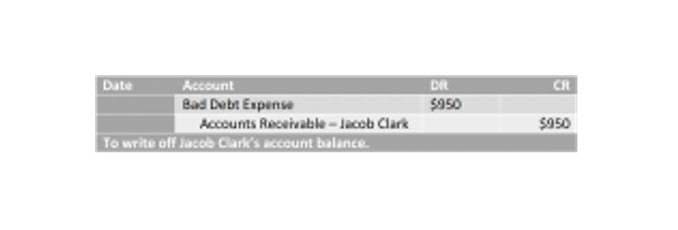
If demand shifts unexpectedly—which is more common in some industries than others—inventory can become backlogged. If an account is never collected, it is entered as a bad debt expense and not included in the Current Assets account. Inventory is plant assets a current asset refers to the raw materials or finished products that a company has on hand. This can include long credit terms with its suppliers or very little credit extended to its customers. Liquidity ratios provide important insights into the financial health of a company. When the working capital is managed well, it can help the business increase its profits, value appreciation, and liquidity.

The exception is land, which typically does not depreciate because it doesn’t wear out or become obsolete over time. A fixed asset is a long-term tangible property or equipment a company uses to operate its business. Fixed assets include buildings, computer equipment, software, furniture, land, machinery, and vehicles.